

Men's Golf Apparel Built for the Course and Beyond
This golf range covers polos, pants, and more. All built in San Francisco for a guy who plays and lives in the same clothes. Pima cotton, stretch blends, and wicking fabrics for the course and your whole weekend.
-
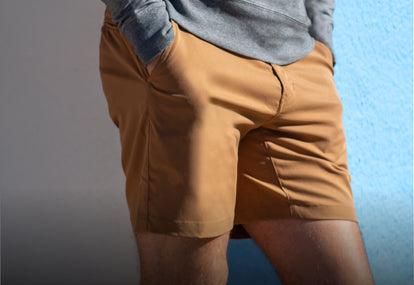
Tour Short -


Tour Short in Khaki $98Rated 4.8 out of 5 stars12 Reviews -


Tour Short in Vintage Blue $98Rated 5.0 out of 5 stars6 Reviews -


Tour Short in Deep Sea $98Rated 5.0 out of 5 stars18 Reviews -


Tour Short in Slate $98Rated 5.0 out of 5 stars21 Reviews -


Tour Short in Dusty Olive $98Rated 4.7 out of 5 stars23 Reviews -


Tour Short in Steely Blue $98Rated 4.9 out of 5 stars11 Reviews -


Tour Short in Sienna $98Rated 5.0 out of 5 stars23 Reviews


Which Piece Fits Your Game
What People Ask About Men's Golf Apparel
What makes a good men's golf shirt?
A good men's golf shirt combines moisture-wicking performance with a fit that allows full shoulder rotation without pulling. Fabric choice matters a lot — performance blends pull sweat away from the skin during warm rounds, while pima cotton offers a softer, more breathable feel for moderate conditions. Construction details like a slightly longer back hem and stretch panels at the shoulders make a real difference mid-swing. On the style side, clean lines and a tailored (not boxy) cut mean the shirt works just as well for a post-round dinner or a weekend errand as it does on the 18th fairway.
What's the difference between a golf polo and a regular polo?
Golf polos are cut with athletic movement in mind, where standard polos are typically cut for a more static fit. The key differences show up in the fabric (performance blends vs. plain cotton), the length (golf polos run slightly longer in the back to stay tucked through a full swing), and the fit through the shoulders (more room to rotate without the shirt pulling across the back). Some golf polos also include stretch gussets, flatlock seams, or UV protection built into the fabric — details that don't show up in a standard polo but matter when you're spending four hours on an open course.
Is men's golf apparel only good for the golf course?
Not even close. The best men's golf clothing is built to transition, and that's a deliberate design choice here. A pima cotton polo that works on the course also works at a casual lunch, a low-key office, or a weekend trip. Four-way stretch trousers read as tailored chinos off the course. The goal is a wardrobe that pulls its weight everywhere, not pieces that live in a bag and come out once a month. If you're building a minimal, functional closet, golf apparel that's designed to transition is one of the smarter investments you can make.
How should men's golf pants fit?
Golf pants should sit at the natural waist or slightly below, with enough room through the seat and thighs to crouch and rotate without restriction. The leg opening should be clean and narrow enough to look tailored but not so slim that it restricts your follow-through. Four-way stretch fabric handles most of the mobility work, so you don't need to size up for movement. As a starting point, fit these like you'd fit dress chinos — the stretch does the rest. If you're between sizes, most golfers find going true to size works well in stretch-woven bottoms.
What fabrics work best for men's golf clothing?
It depends on the conditions. Moisture-wicking performance blends (typically nylon or polyester-spandex) are the go-to for warm, humid rounds because they pull sweat away and dry fast. Pima cotton offers superior softness and breathability for cooler conditions or indoor-to-outdoor days where you're not sweating heavily. Four-way stretch woven fabric is the standard for golf pants and shorts because it handles the rotational demands of a swing without bunching or restricting. For outerwear, wind-resistant ripstop nylon handles coastal and early-morning conditions well. No single fabric wins every situation, which is why a functional golf wardrobe usually covers at least two of these categories.
How do I choose the right size in golf shirts?
Start with your chest measurement and cross-reference the size chart. For golf shirts specifically, pay attention to the shoulder width measurement if it's available, because the shoulders drive most of the fit issues in this category. A shirt that fits well in the chest but is too narrow across the shoulders will restrict your swing and pull on your backswing. If you're between sizes, most golfers with athletic builds find sizing up in the chest and adjusting with a tailor (if needed) works better than sizing down. A well-fitting golf shirt should lay flat across the chest, allow you to raise both arms overhead without the hem pulling out, and have a clean line through the torso without bagging.
What should I wear for an early morning golf round?
Layering is the answer for early tee times. Start with a moisture-wicking polo or base layer that handles the transition as temperatures rise, add a lightweight pullover or zip-up midlayer for the first few holes, and pack a wind-resistant shell in your bag for exposed holes on coastal or elevated courses. Avoid heavy cotton on cold mornings — it absorbs dew and morning humidity and takes a long time to dry. Stretch performance fabrics stay comfortable as the day warms up and you start shedding layers. A good rule: dress for the temperature at hole 9, not hole 1.
How do I care for performance golf shirts?
Machine wash cold with similar colors and skip the fabric softener — softener coats the fibers and gradually kills the moisture-wicking finish. Tumble dry on low or hang dry if you want to get the most life out of the fabric. Avoid high heat in both the wash and the dry cycle, since sustained heat breaks down the elastane that gives performance fabric its stretch. Don't iron directly on printed logos or heat-transfer details. Treat stains before washing — performance fabrics are tightly woven and stains can set quickly if left to sit. With consistent care, a quality golf shirt should hold its shape and finish well through dozens of rounds.
What's the difference between golf shorts and regular athletic shorts?
Golf shorts are cut and constructed differently than gym or running shorts. They use structured woven fabric (rather than knit jersey) so they hold a clean, tailored silhouette. The inseam is typically longer (7 to 9 inches vs. 5 to 7 for athletic shorts), they include belt loops and a button closure, and they're designed to look as sharp standing at the bar post-round as they do on the fairway. Performance details like four-way stretch and moisture-wicking treatment are shared with athletic shorts, but the overall construction is closer to tailored shorts than to training gear. Most golf courses with a dress code require this type of structured short — knit athletic shorts won't pass muster at most clubs.
What makes this brand's golf apparel different from other men's golf clothing brands?
The design philosophy here starts with versatility, not just performance. Most golf apparel brands are building for the course first and hoping it works elsewhere. The goal here is the opposite — clean, minimal construction that functions on the course because the fabrics and cut can handle athletic movement, not because it's covered in logos and brand markings. Pima cotton and four-way stretch performance blends are the workhorses of the collection, chosen for how they feel and hold up, not just how they perform on a spec sheet. The fits are tailored without being restrictive. The aesthetic is consistent whether the piece ends up on the course, in a meeting, or at the airport. Sizes run across a full range to fit real builds, and the cut is designed for men who work out and want their clothes to reflect that without screaming it.
