

Men's Henley Shirts Built for the Gym and Beyond
San Francisco bred, workout ready, weekend approved. Our men's henley shirts are cut for the guy who doesn't change clothes between the gym and grabbing coffee. He shouldn't have to.
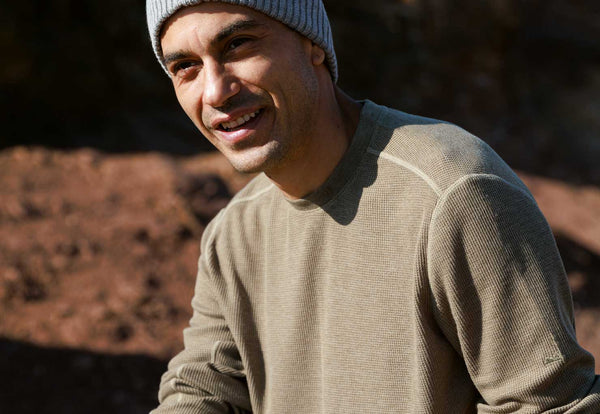


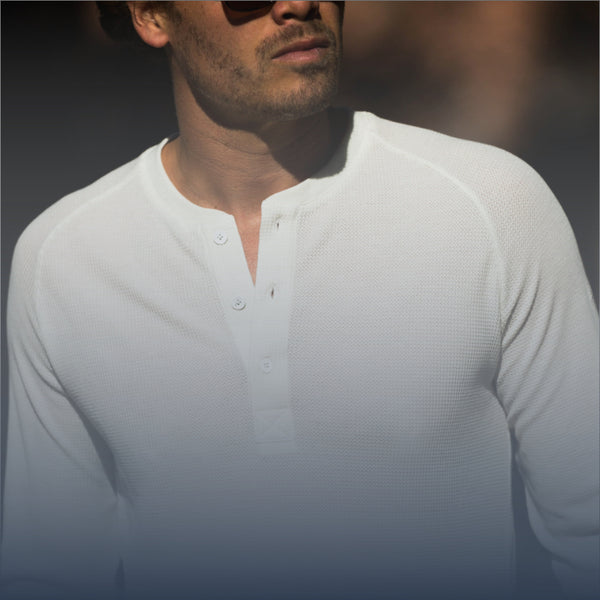


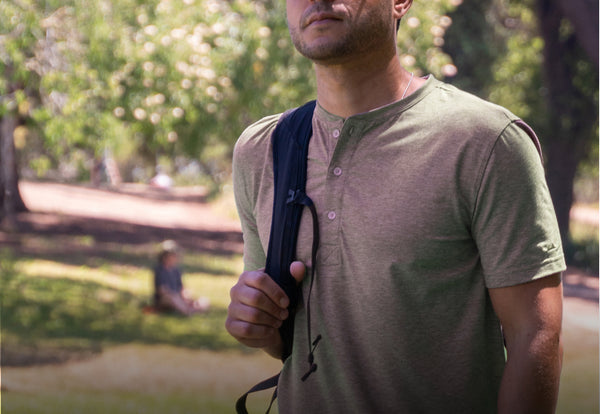


Which Henley Style Works for You
Real Questions About Men's Henley Shirts
What makes a henley shirt different from a regular crewneck or t-shirt?
A henley shirt is a collarless shirt with a placket and two to four buttons at the neckline, sitting just below the collar line. That small detail changes the whole look — it adds visual structure without the formality of a polo and more personality than a plain crewneck. For men who want something that reads as intentional without being overdressed, it's a strong middle ground. The button placket also makes it easier to regulate temperature during training or layering when the weather shifts.
Are these henley shirts good for working out?
Yes, specifically the performance styles in this collection are built for it. The moisture-wicking fabric pulls sweat away from your skin, and the four-way stretch means the shirt moves with you through a full range of motion without pulling or bunching. The cut is athletic without being restrictive. If you're training in a long sleeve henley, look for the performance blend options — the pima cotton styles are softer and better suited to low-intensity sessions, travel, or daily wear.
What fabric should I choose for everyday wear versus the gym?
For everyday wear, the pima cotton henley shirts offer a noticeably softer hand feel and a relaxed, natural drape that suits casual settings well. Pima cotton is more durable and finer than standard cotton, which means it holds its shape and color longer with regular washing. For the gym or any high-output activity, the performance blend fabrics are the better call — they manage moisture, stretch with movement, and dry faster. A lot of guys end up with both: one fabric for training days, one for everything else.
How should a men's henley shirt fit?
A well-fitted henley should sit close through the chest and shoulders without pulling at the seams, and the hem should hit at or just below the hip. Sleeves on a long sleeve henley should reach the wrist with a slight taper through the forearm. You don't want so much volume that it looks boxy, but it shouldn't hug every contour either — the goal is a clean, modern silhouette that reads athletic without looking like compression wear. If you're between sizes, go with the smaller size in performance fabrics, which have stretch built in.
What's the difference between a long sleeve henley and a short sleeve henley?
Beyond sleeve length, the two styles serve slightly different purposes in a wardrobe. A long sleeve henley functions well as a base layer under a bomber or overshirt in cooler weather, and it adds more coverage for outdoor training in fall or winter. The short sleeve version sits squarely in casual-to-athletic territory and is the easier grab for warmer months or indoor training. Both share the same placket and button construction — the choice usually comes down to season and whether you want a layering option or a standalone piece.
Can I wear a henley shirt as a standalone top or does it need to be layered?
A henley works well on its own. The placket detail gives it enough visual interest that it doesn't need a jacket or overshirt to look finished. That said, a long sleeve henley layers cleanly under a zip hoodie, a shacket, or a minimal bomber without adding bulk at the collar. The collarless neckline is what makes it work both ways — there's nothing to fold down or tuck, so it sits flat and clean underneath whatever you put over it.
How do I wash and care for men's henley shirts?
For pima cotton henleys, machine wash cold on a gentle cycle and lay flat or hang to dry — the heat from a dryer is what causes cotton to shrink and lose shape over time. For performance blend styles, cold wash is still the call, but you can tumble dry on low since these fabrics are engineered to handle it. Avoid fabric softeners on moisture-wicking performance fabrics as they coat the fibers and reduce breathability. Button the placket before washing to prevent the buttons from snagging other items.
What sizes are available and how do I find the right one?
Sizes run from small through XXL, with a size guide on each product page built around chest and waist measurements rather than generic sizing descriptions. The performance fabric styles have meaningful stretch, so they're forgiving if you're between sizes. The pima cotton styles have less give, so sizing up is worth considering if you prefer a roomier fit or plan to layer. When in doubt, measure your chest at its widest point and match it to the size chart rather than going by what you typically wear in another brand.
What sets these henley shirts apart from other men's athletic brands?
The design philosophy comes from San Francisco — a city where the gym, the trail, and a decent brunch spot are often on the same block, and you don't want to think about changing between them. These aren't henley shirts that happen to be athletic, or athletic shirts that happen to have a button placket. The construction handles both without compromise: pima cotton and performance blends chosen specifically for how they perform and how they look, a cut that's athletic but never costume-y, and a minimal aesthetic that doesn't age out after one season. The fit and fabric quality are what justify the price point — not branding.
