Choose up to 5 items to try. Take 7 days after delivery to decide what you'd like to keep
Pay later
We’ll put a hold on your card for the full order amount and reauthorize as needed, but you’ll only pay for what you keep.
Free Returns
We think you'll love your new activewear — and we're making it easy to find your perfect fit and style. Print out a free shipping label and send back any unworn items that you don't want within your 7 day trial.
We do not accept any returns if the tags are removed or the item is worn or washed, so make sure to leave all tags attached until you decide to keep the item(s).
Try At Home orders are not eligible for discount codes. See FAQs for more info.
Every trip has a packing problem. You need clothes that hold up through long flights, back-to-back meetings, a post-arrival run, and dinner that same night, without a wardrobe change between each one. That's what this collection solves. These are men's travel clothes designed to do more than survive the trip. They're built to perform through it.
Not every piece works the same way. Here's what's in the collection and where each one earns its place in the bag.
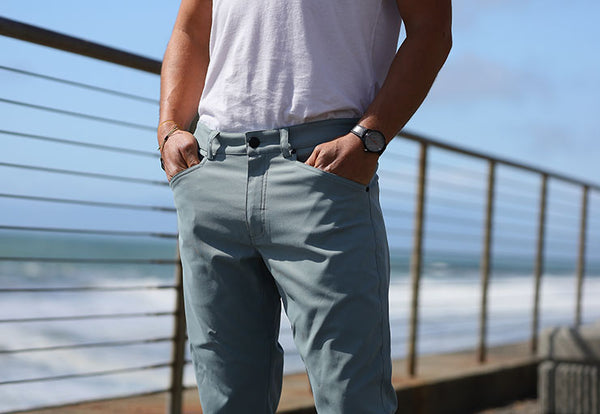
Travel Pants. Four-way stretch fabrication and a tailored cut that reads as smart casual — men's travel pants that pack small, recover fast, and don't telegraph "I've been on a plane since 6am."
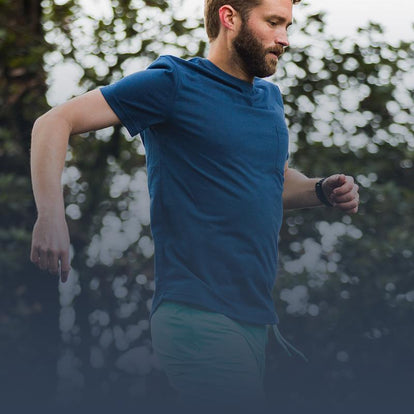
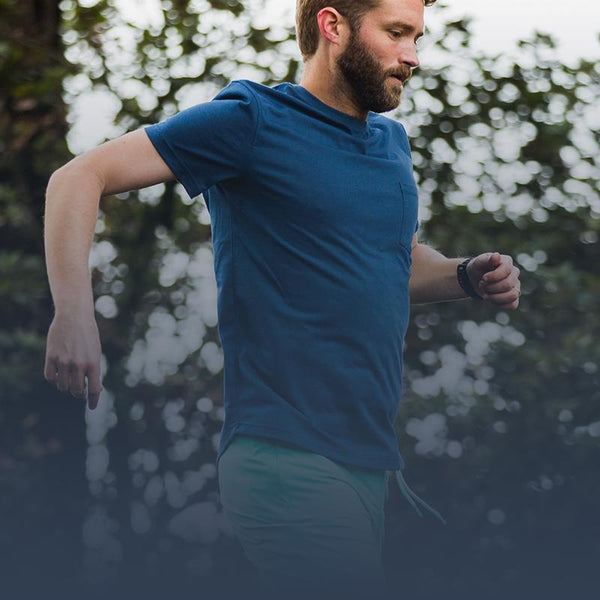
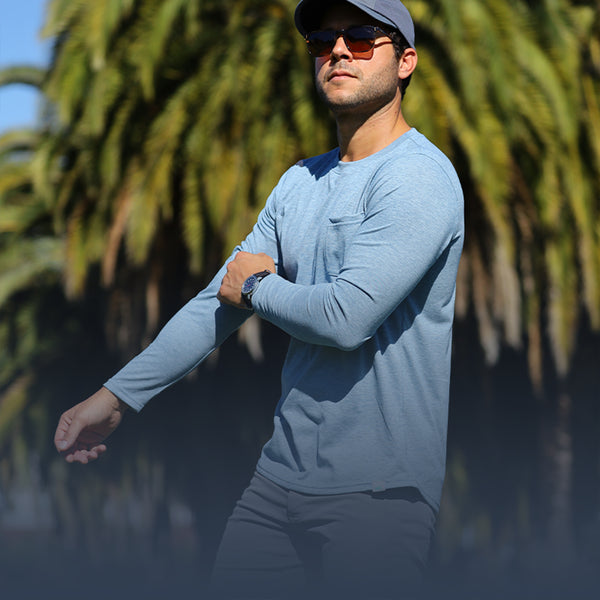
Performance Tees. Moisture-wicking, pima cotton-blend tops that handle heat, hold their shape, and look clean whether you're grabbing coffee or checking in to a meeting.
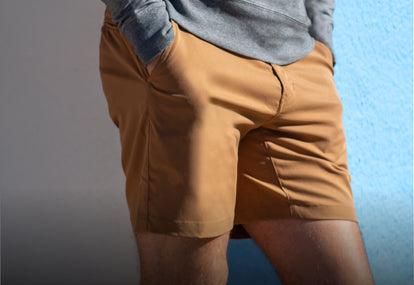
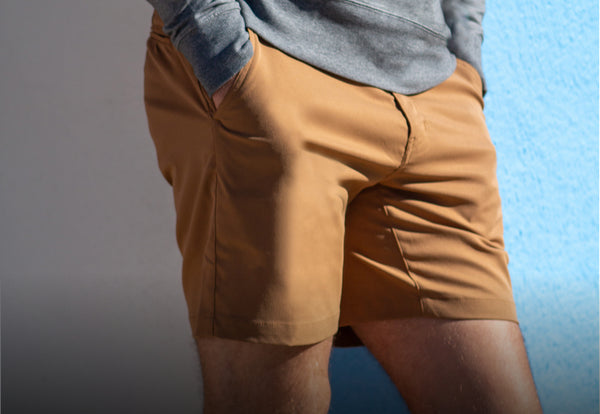
Versatile Shorts. Stretch construction and clean lines keep these on the right side of casual — gym-ready in the morning, street-ready by afternoon.
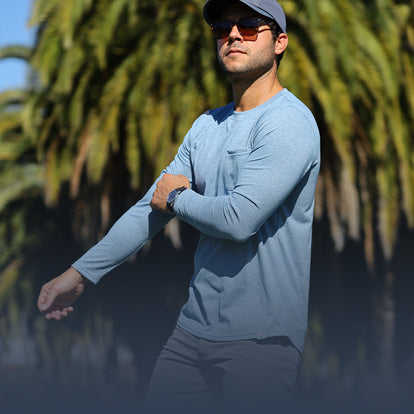
Layer-Ready Tops. Lightweight midlayers designed to compress into a side pocket and come out looking presentable. Because hotel rooms get cold and airports get unpredictable.
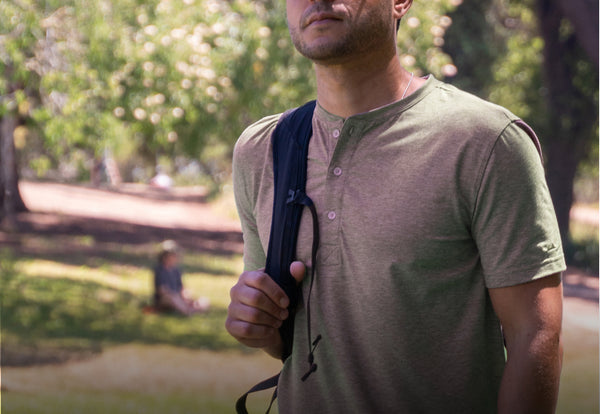
Transition Polos and Tops. The pieces that bridge athletic function and evening-appropriate appearance. Sweat-managed fabric under a clean exterior finish.
What makes men's travel clothes different from regular clothes?
Men's travel clothes are built around performance fabrics and functional construction that regular casualwear doesn't prioritize. The core differences are fabric technology and fit flexibility: travel apparel typically uses four-way stretch blends, moisture-wicking finishes, and wrinkle-resistant weaves so the clothes handle movement, heat, and compression inside a bag without looking worn down. Regular cotton tees wrinkle on contact. Regular jeans restrict mobility on long hauls. Travel-specific pieces are cut and constructed to do both jobs — perform under physical demand and still look intentional when you arrive.
What should I look for in travel pants for men?
The best travel pants for men combine stretch, structure, and pack-ability in one cut. Look for four-way stretch fabric that doesn't lose its shape after a full day of wear, a waistband construction that stays comfortable seated for hours, and a tapered or slim cut that reads as smart casual without needing a belt to look put-together. Wrinkle recovery is non-negotiable. A pant that comes out of a carry-on looking like you pressed it is worth more than any dedicated dress pant for multi-purpose travel.
Are these clothes suitable for both the gym and everyday wear?
Yes — that's the entire design philosophy behind this collection. These pieces are engineered for athletic performance (sweat management, freedom of movement, durable stretch construction) but finished and cut to read as regular menswear in casual and smart-casual contexts. A performance tee that wicks moisture and holds its shape through a workout can go straight to breakfast or a coworking space without a change. The goal isn't "can survive both environments." It's "looks intentional in both."
How do I pack men's travel apparel without wrecking it?
Roll stretch-fabric pieces rather than folding to reduce crease points. Heavier structured items like travel chinos do better folded flat at the bottom of the bag. Pima cotton and performance blends are naturally more resilient to compression than woven cotton or linen, so most pieces in this collection recover well from a tight pack. Give them ten minutes hung in a humid bathroom after a long flight and they'll be ready. No steaming required.
What fabrics work best for travel clothing?
Four-way stretch nylon and polyester blends handle athletic demand and compress well. Pima cotton and cotton-modal blends add softness and a premium hand feel without sacrificing breathability. The strongest travel fabrics combine both: a nylon or spandex backbone for structure and recovery, and a surface finish that breathes well and feels good against skin in warm climates. Avoid 100% woven cotton for core travel pieces — it wrinkles under pressure and doesn't manage moisture during active stretches of the day.
How do men's travel clothes handle hot and cold climates differently?
Moisture-wicking fabrics and open-weave constructions manage heat and humidity by pulling sweat away from the skin and allowing airflow. In colder climates, lightweight midlayers and tighter knit constructions trap warmth without bulk. The smart move for variable climates is a layering system built around one core travel pant and a set of tops that range from short-sleeve wicking tees to a compressible layer that fits in a jacket pocket. You're not packing for one climate — you're packing a system that handles the range.
What's the difference between travel pants and regular chinos?
Travel pants are built with performance-oriented fabrics and construction details that regular chinos skip. Standard chinos are typically woven cotton — structured, but stiff, prone to wrinkling, and cut without the stretch allowance that makes a long day of walking or a full flight comfortable. Men's travel pants use stretch-woven synthetics or cotton-stretch blends, incorporate an articulated cut through the seat and knee for mobility, and include details like a gusseted crotch or hidden waistband stretch panel that traditional chinos don't. The end result looks similar. The wear experience is completely different.
How do I care for performance travel apparel?
Machine wash cold, tumble dry low or hang dry. Most performance blends — nylon, polyester, spandex compositions — don't need heat to dry and actually last longer without it. Avoid fabric softener on moisture-wicking pieces. Softener coats the fibers and degrades wicking performance over time. For pima cotton blends, a cool wash protects the fiber length that gives the fabric its softness and keeps the color from fading faster than it should. Follow the care label, but the general rule is: less heat, longer life.
Are these clothes appropriate for business travel and client-facing days?
Depends on the dress code, but for smart-casual to business-casual environments, yes. Travel pants in a slim or tapered cut with a clean finish read as intentional — not athletic. Pair them with a structured polo or a layer-ready top and you're presenting well without wearing a suit. For formal business environments, these pieces work as off-hours options or travel-day wear, with a swap to formal attire at the destination. The point of the collection is to shrink what you need to pack, not to replace everything.
What makes this brand's men's travel apparel worth buying over a cheaper alternative?
The fabrication is where the difference shows. Cheaper travel apparel cuts corners on fabric quality — lower-grade stretch blends that lose their shape after ten washes, synthetic fabrics that feel stiff or don't breathe in warm climates, and construction that looks clean in the store and pulls at the seams within a season. This collection uses pima cotton blends, performance-grade moisture-wicking fabrics, and four-way stretch constructions that hold up through genuine use — not just the first trip. The cut is also specific: designed in San Francisco for men who actually move through their days, not travel-themed leisurewear with an inflated price tag. Fit, fabric, function. That's the standard every piece in here is held to.
MYLES 5 YEAR QUALITY GUARANTEE
Every piece of Myles gear is made for the long run, which means it’s built to last. That’s why we promise to replace or help fix any items purchased from our website with defects that are not the result of expected wear and tear for 5 years from the time of purchase. It’s the right thing to do for our customers who put their trust in us to deliver durable, quality apparel, and the right thing to do for the planet because poorly made gear turns into waste. If your Myles gear ever truly lets you down, send us a note at contact@mylesapparel.com. We’ll work with you to find a solution and make things right.
FREE RETURNS & EXCHANGES FOR 30 DAYS
We’re happy to offer free, no-hassle returns and exchanges on all domestic orders unless the item is marked as Final Sale on our website. Returned items must not have been worn, altered or washed and must be sent back within 30 days of placing your order. Please note there will be a $12 shipping and handling fee for all returns, unless order protection was purchased.