Choose up to 5 items to try. Take 7 days after delivery to decide what you'd like to keep
Pay later
We’ll put a hold on your card for the full order amount and reauthorize as needed, but you’ll only pay for what you keep.
Free Returns
We think you'll love your new activewear — and we're making it easy to find your perfect fit and style. Print out a free shipping label and send back any unworn items that you don't want within your 7 day trial.
We do not accept any returns if the tags are removed or the item is worn or washed, so make sure to leave all tags attached until you decide to keep the item(s).
Try At Home orders are not eligible for discount codes. See FAQs for more info.
Every top in this collection is designed to do more than one thing. Whether you're heading into a training session, running errands, or meeting friends after a workout, these men's tops are built to move with you, not against you. Pima cotton tees that feel broken-in on day one. Performance blends that handle sweat without showing it. Four-way stretch fabrics that don't restrict your range of motion.
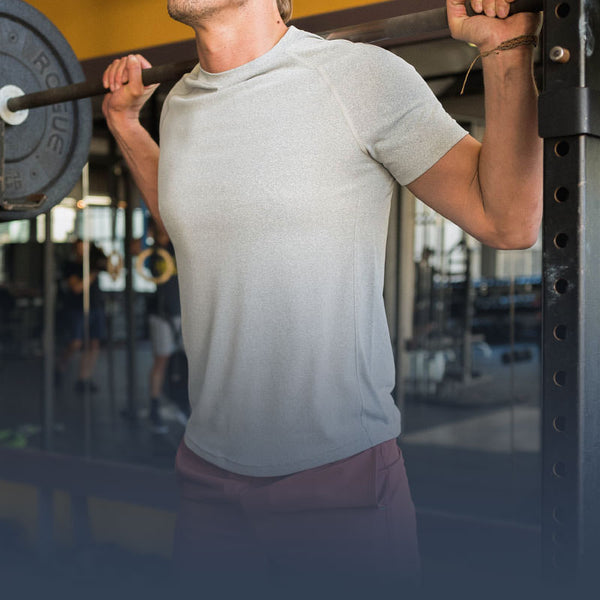
Performance Tees. Lightweight, moisture-wicking men's t-shirts built for training, running, and any workout that demands breathability without bulk.
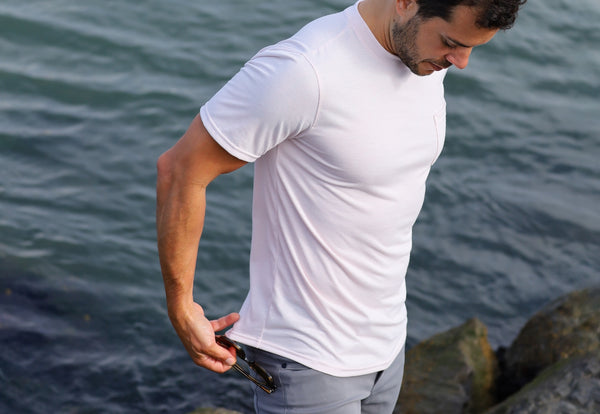
Pima Cotton Tees. Everyday men's tops in premium pima cotton — softer and more durable than standard cotton, with a clean drape that works at the gym or out the door.
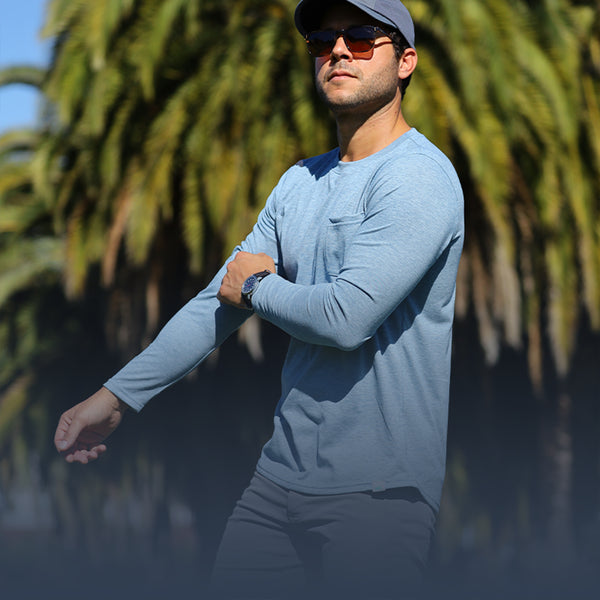
Long-Sleeve Shirts. Versatile men's shirts that layer well in cooler months and hold their shape through repeated wash cycles.
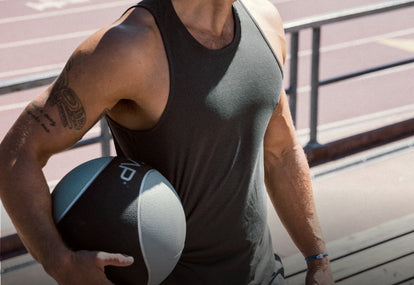
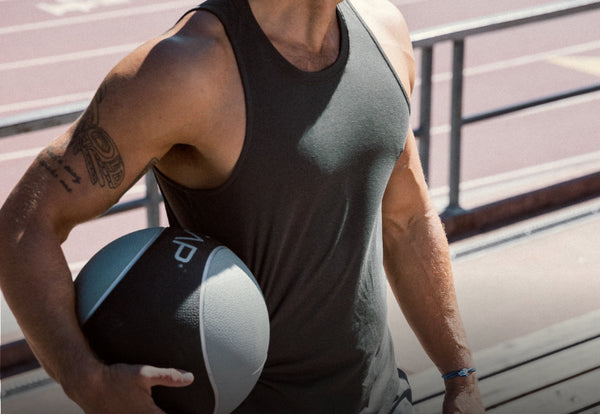
Athletic Tanks. Cut for full shoulder mobility with fabrics that wick fast and dry faster — the top you reach for on your heaviest training days.
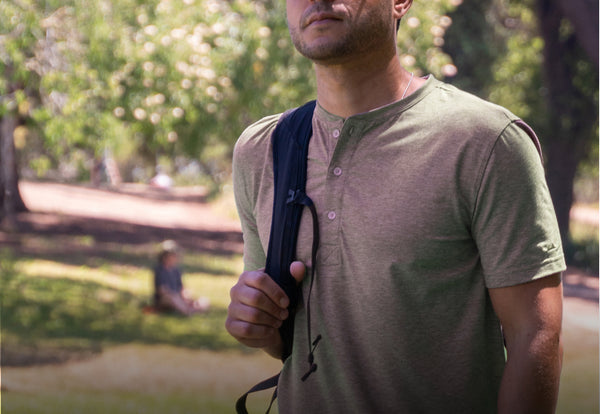
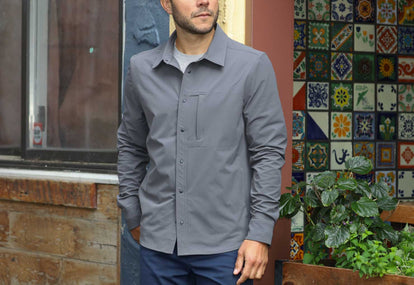
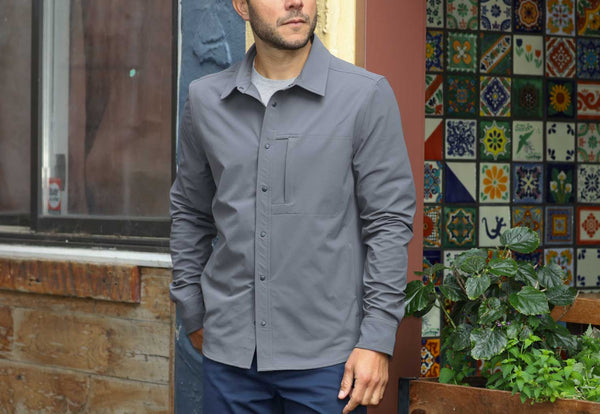
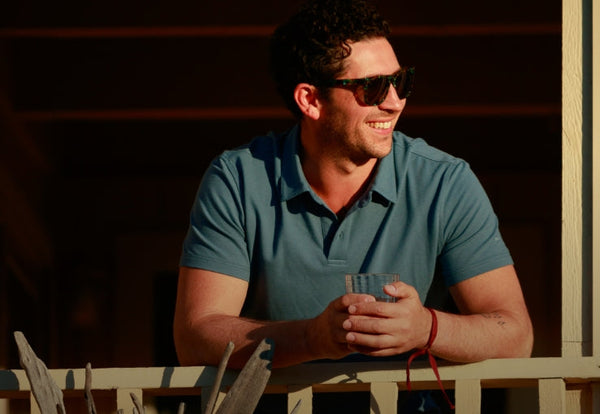
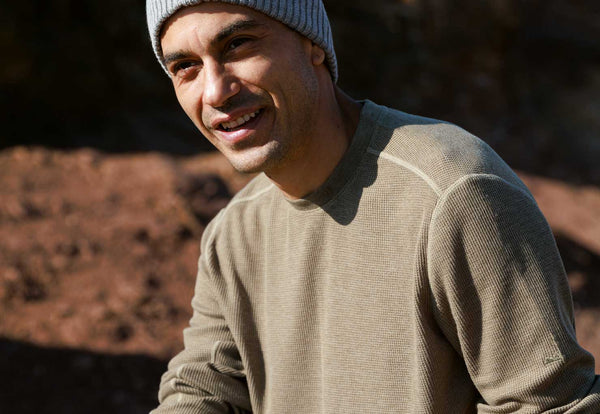
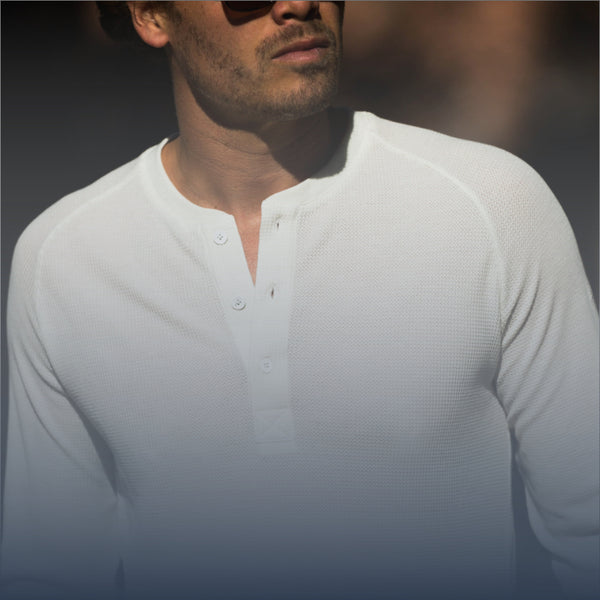
Henley and Casual Shirts. The weekend edit. Four-way stretch and clean lines make these men's shirts the easiest transition from gym bag to barstool.
The collection spans two core fabric families: premium pima cotton and performance blends. Pima cotton is a longer-staple cotton fiber than what you'd find in standard tees, which means a softer hand feel, better color retention, and longer lifespan through regular washing. The performance side of the collection uses moisture-wicking blends, typically a nylon or polyester base with four-way stretch built in. Both fabric families are chosen specifically for how they hold up to movement and repeated wear, not just how they feel in the store.
What is the difference between pima cotton and regular cotton in a t-shirt?
Pima cotton has a significantly longer fiber length than conventional cotton, which produces a smoother, finer yarn. The result is a t-shirt that's noticeably softer against skin, resists pilling over time, and holds its shape wash after wash. Standard cotton tees tend to feel stiff initially, soften briefly, then degrade. A well-made pima cotton men's t-shirt moves in the opposite direction — it gets better with wear, not worse. If you're wearing a top every week, the fabric quality difference matters more than you'd expect.
How do these men's t-shirts fit?
The fit across this collection is designed to sit between athletic and tailored — not a compression cut, not a boxy silhouette. Shoulders sit at the natural shoulder point, sleeves have enough room to move without excess fabric bunching, and the hem length works tucked or untucked. If you're between sizes, most styles in the collection are cut to accommodate an athletic build, so sizing down is rarely necessary. Size charts with chest and length measurements are included on each individual product page.
Are these tops good for both working out and everyday wear?
Yes, and that's the specific design intent. Performance men's tops in this collection use four-way stretch and moisture-wicking fabrics that perform under training conditions, but they're cut and finished to look like a well-made casual shirt. The pima cotton styles aren't technical fabric, but their drape and structure carry them easily from a morning walk to a weekend errand run. You don't need to own a separate "gym wardrobe" and a "regular wardrobe" — these tops are built to cover both.
How should I care for these men's shirts to make them last?
Machine wash cold on a gentle cycle, and skip the dryer if you can. Heat is the enemy of both pima cotton (which can shrink and lose its drape) and performance blends (which degrade the moisture-wicking finish over time). Hang or lay flat to dry. For the performance tees specifically, avoid fabric softener — it coats the fibers and reduces breathability. Follow the care label on each specific garment, but cold wash and air dry covers most of what you need to do to keep these tops in rotation for years.
What's the difference between a performance tee and a pima cotton tee for the gym?
Performance tees are built for active output. The moisture-wicking fabric moves sweat off skin and dries fast, which matters during anything high-intensity. The four-way stretch means overhead movements, lateral shifts, and deadlifts don't pull the fabric out of shape. Pima cotton tees aren't the right call for a hard training session — cotton holds moisture rather than wicking it. But for lower-intensity movement, a commute, or a gym session where you'd rather look like you're not working out, a quality pima tee handles it well. Think of it as choosing a tool for the job.
Do these men's tops run true to size?
Generally, yes. The collection is designed to fit an athletic male frame without requiring you to size up for shoulder room. Chest measurement is the most reliable fit guide for these styles. If you're broader through the chest or shoulders than the size chart suggests, sizing up is the better call — the torso length and sleeve proportion will scale accordingly. Specific fit notes are included on each product page for styles where the sizing runs differently.
How does four-way stretch work in a men's shirt?
Four-way stretch means the fabric moves in two directions: horizontally across the width and vertically along the length. In practical terms, that means the shirt moves with you when you raise your arms, twist your torso, or go through a full range of motion in a lift. A shirt without that stretch either restricts movement or pulls the hem up and the collar out of place every time you move. The key is that these men's tops return to shape after stretching — the fabric has recovery built in, so nothing goes baggy or distorted over time.
What makes these tops different from other men's athletic shirts on the market?
The design philosophy starts in San Francisco, where the expectation is that clothing does more than one thing without announcing itself. These men's tops aren't covered in logos or performance branding — the fabric quality does the work instead of the marketing. Pima cotton sourced for hand feel and durability. Performance blends selected for moisture management and stretch recovery, not just moisture-wicking claims on a hangtag. The cuts sit between fitted and relaxed, which means they work outside a gym context without looking like you're trying to pass off workout gear as street wear. The range covers sizes designed to fit a range of athletic builds, with consistent quality across the full collection.
Are these men's shirts worth the price compared to cheaper alternatives?
The honest answer is: it depends on how you wear them. If a men's t-shirt is something you replace every season without thinking about it, cheaper options exist. But if you're looking for tops that hold up to two or three wears a week, frequent washing, and actual physical activity without fading, shrinking, or losing their shape, the fabric quality here makes the per-wear cost lower over time than it looks at first. Pima cotton and quality performance blends cost more to produce, and that's reflected in the price. What you're buying is durability and consistency — not a name or a logo.
MYLES 5 YEAR QUALITY GUARANTEE
Every piece of Myles gear is made for the long run, which means it’s built to last. That’s why we promise to replace or help fix any items purchased from our website with defects that are not the result of expected wear and tear for 5 years from the time of purchase. It’s the right thing to do for our customers who put their trust in us to deliver durable, quality apparel, and the right thing to do for the planet because poorly made gear turns into waste. If your Myles gear ever truly lets you down, send us a note at contact@mylesapparel.com. We’ll work with you to find a solution and make things right.
FREE RETURNS & EXCHANGES FOR 30 DAYS
We’re happy to offer free, no-hassle returns and exchanges on all domestic orders unless the item is marked as Final Sale on our website. Returned items must not have been worn, altered or washed and must be sent back within 30 days of placing your order. Please note there will be a $12 shipping and handling fee for all returns, unless order protection was purchased.